
Laitance and sanding
Laitance is a weak, dusty skin of fine particles that can form on the surface of an anhydrite screed as it cures. Left on, it weakens the bond of adhesives and slows the drying. It's taken off by sanding.
On a traditional calcium sulphate mix, brush or sand off loose laitance at 7 to 10 days, then sand again just before the floor goes down, with an orbital sander, a vacuum and a 60 grit disc.
Free, no obligation. One local screeding contractor prices it, not five.
Which screeds need it
| Screed | Laitance |
|---|---|
| Calcium sulphate, traditional mix | Can form |
| Calcium sulphate, low laitance mix | Additive prevents it |
| Hemihydrate liquid screed | Doesn't form |
| Cement-based liquid screed | Possible residue |
| Cement-based liquid screed | None after curing |
How it's sanded
- WhenFirst pass at 7 to 10 days on a traditional anhydrite mix; final pass immediately before the floor finish.
- With whatAn orbital sanding machine with an integrated vacuum, a 60 grit paper or carborundum disc.
- How muchJust the skin. Sanding removes laitance and dirt and gives a key. It isn't for taking depth off the screed.
- ThenVacuum, then prime with the adhesive maker's primer. Primers and floor finishes.
Why early sanding helps
Taking loose laitance off at 7 to 10 days helps the drying, because the skin holds moisture in. On a floor with a deadline, ask the contractor whether that first pass is in their price, and whether they're pouring a traditional or a low-laitance mix.
Liquid screed poured by the contractor who takes your call
Calls on this site ring JAM Floor Screeding: James Mulhall, based in Portlaoise, 25 years laying floors. Lines open Mon to Sat, 7am to 6pm. These are his jobs.
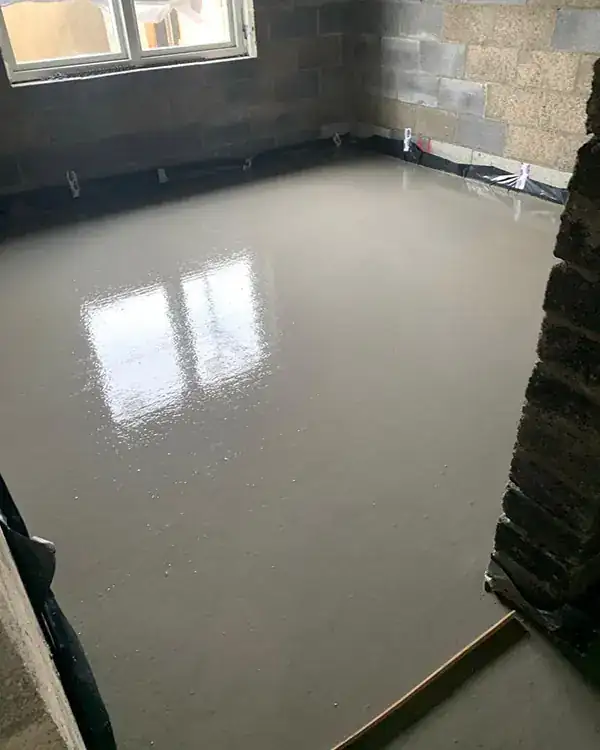
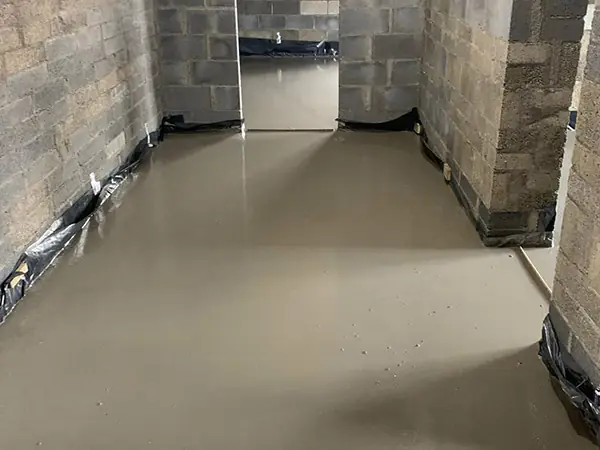
“JAM were punctual, professional and efficient and did an outstanding job on pouring our new floor as part of a renovation. Very highly recommend!”
“Excellent work, laser level finish, neat and tidy worker, highly recommend.”
“Top class work by james and his crew, highly recommend”
Quoted word for word from JAM Floor Screeding's Google reviews. Read them on Google
Get your floor priced in 4 quick taps
Tell us about the floor. It goes to one screeding contractor who covers your county, and they ring you to price it.
Liquid screed guides & price breakdowns
Straight answers to what people ask most: itemised costs, specifications, planning or grants, and what to check before you book.
More guides & resources: Tiles, wood and vinyl on liquid screed · Joints and bay sizes · Is liquid screed right for my floor ? · All guides & calculator hub · Technical & trade glossary · Frequently asked questions · All areas covered · About this site
Laitance and sanding questions
What is laitance on screed?
A weak, dusty layer of fines on the surface of a calcium sulphate screed. It's sanded off so adhesives bond and the screed dries.
When should liquid screed be sanded?
On a traditional calcium sulphate mix: a first pass at 7 to 10 days, then again just before the floor finish.
Does every liquid screed need sanding?
No. Cement-based liquid screed has no laitance to sand, and nor does hemihydrate. Cement-based liquid screed is lightly abraded.
What grit is used to sand screed?
60 grit paper or a carborundum disc on an orbital sander with an integrated vacuum.
Liquid screed across all 26 counties
Requests from all 26 counties go to one vetted local specialist who covers your county — from Dublin, Cork, Galway and Limerick to Kildare, Meath, Wicklow, Waterford and Donegal. Pick your county below for local prices, specifications and advice. Compare all areas covered →
Get a free quote for your floor
Four taps and your number. One screeding contractor who covers your county rings you with a price. Nothing is booked until you say yes.